 Voyage to Paradise
The World’s Largest Archipelago
Indonesia is a nation of islands — 17,508 of them according to the Naval Hydro-Oceanographic Office, though only about 6,000 are inhabited. The country’s very name reflects this identity: “Indonesia” combines two Greek words, Indos (“Indian”) and Nesos (“islands”).
Scale and Location
The archipelago stretches 5,150 km (3,200 miles) along the equator — roughly the distance from Los Angeles to New York. This makes Indonesia the largest archipelago in the world.
Strategically positioned between the Asian and Australian continents and the Pacific and Indian Oceans, Indonesia occupies a unique geographic crossroads. Seas and oceans make up 81 percent of the nation’s total area. The land area covers 1,919,440 sq km, with rivers and lakes accounting for 93,000 sq km.
Main Islands
Five main islands and 30 smaller archipelagos are home to the majority of the population:
- Kalimantan (Indonesian Borneo) — 1,539,400 sq km
- Sumatra — 473,606 sq km
- Papua (Irian Jaya) — 421,981 sq km
- Sulawesi — 189,216 sq km
- Java — 132,187 sq km
Despite being the smallest of the five main islands, Java is home to roughly 70 percent of the entire population.
Indonesia shares the island of Papua with Papua New Guinea and the island of Kalimantan (Borneo) with Malaysia and Brunei Darussalam.
Landscape and Climate
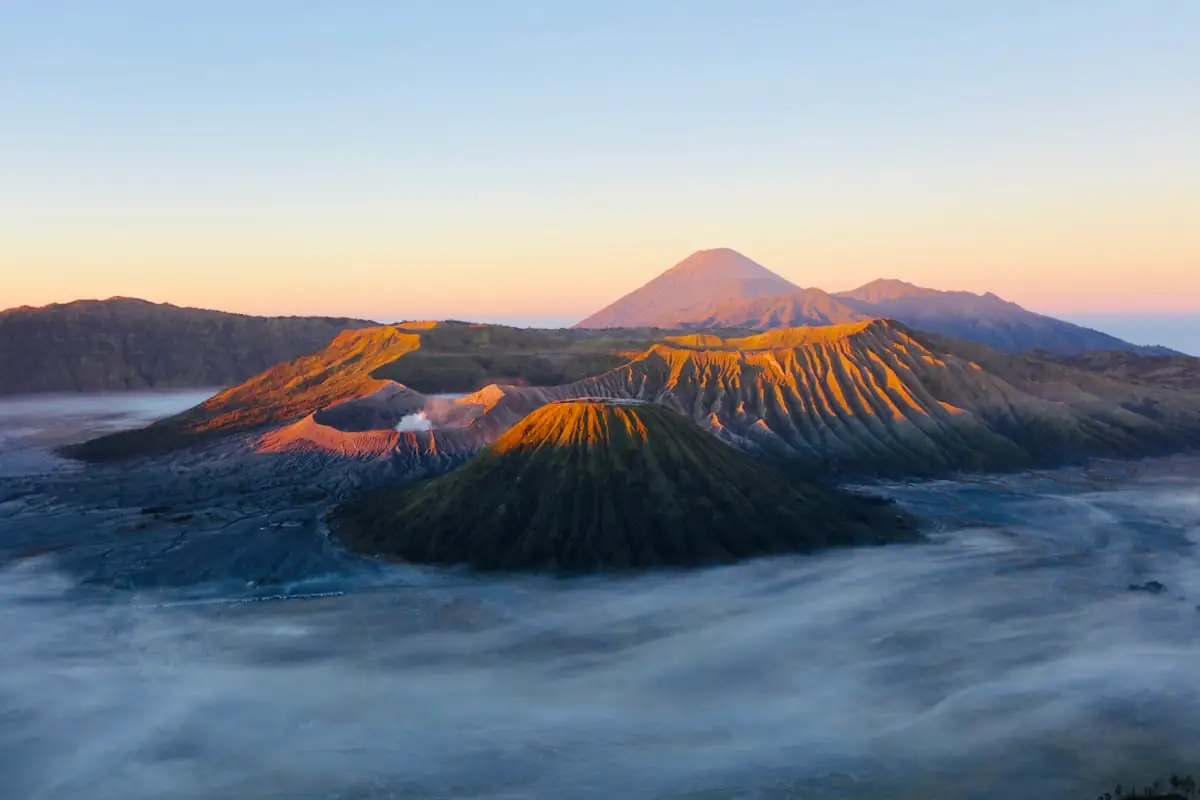
The land is generally covered by thick tropical rainforests, with fertile soil continuously replenished by volcanic eruptions. Indonesia is one of the most volcanically active countries on Earth, with some 400 volcanoes, of which about 100 are still active.
The tropical climate means warm weather year-round, with two main seasons: a dry season (April to October) and a wet season (November to March). Temperatures at sea level typically range from 25-35 degrees C (77-95 degrees F), while highland areas are noticeably cooler.
Why It Matters for Your Trip
Indonesia’s vast geography means that each island offers a completely different experience. The volcanic landscapes of Java, the coral reefs of Nusa Tenggara, the rainforests of Sumatra, and the highland cultures of Sulawesi are all part of the same country — yet feel like different worlds. This incredible diversity is what makes traveling with a knowledgeable guide like Cary so valuable.